
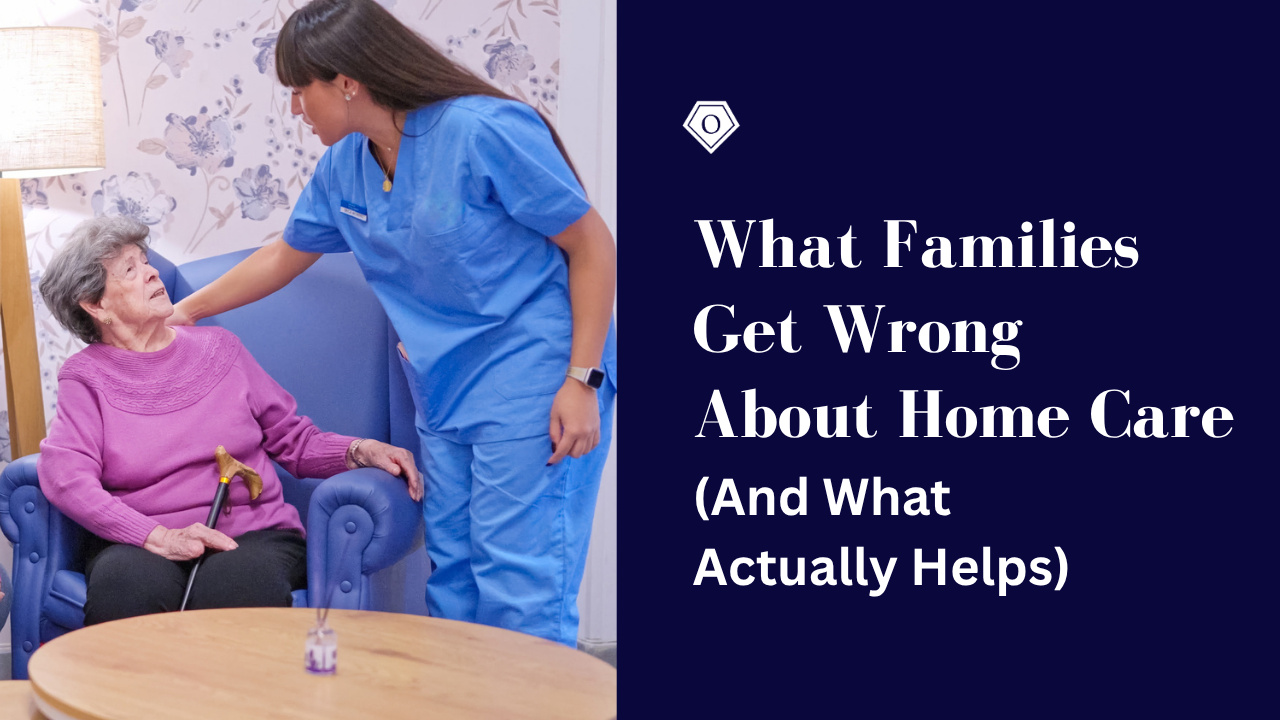
Many families wait too long to get support
Most families do not deliberately ignore care needs.
They are trying to do the right thing. They want to protect their parent’s independence. They want to step in themselves. They want to believe things are still manageable.
But in many cases, what families believe about home care is based on outdated assumptions or incomplete information.
By the time they realize they need help, the situation has often become more stressful, more emotional, and harder to manage.
Understanding what actually helps can completely change that experience.
Myth 1: “We only need home care when things get really bad.”
This is one of the most common misunderstandings.
Home care is not just for the final stages of decline. It is most effective when it starts earlier.
Early support can look like:
- Help with daily routines like meals, bathing, and mobility
- Companionship and supervision
- Establishing consistent structure and safety
When care begins early, it:
- Reduces the risk of falls and hospitalizations
- Helps maintain independence longer
- Creates stability before a crisis happens
Waiting too long often leads to reactive rather than thoughtful decisions.
Myth 2: “Our family can handle everything on our own.”
Families are capable. That is not the issue.
The challenge is sustainability.
Caregiving over time becomes physically and emotionally demanding, especially when one person carries most of the responsibility.
This often leads to:
- Burnout
- Strained family relationships
- Inconsistent care routines
What actually helps is adding support, not replacing the family.
Professional caregivers create a reliable structure so families can step back into their roles as sons, daughters, and spouses rather than remain full-time caregivers.
Myth 3: “Home care means losing independence.”
Many families worry that bringing in help will take something away.
In reality, the opposite is often true. The right kind of support protects independence.
With consistent care:
- Daily routines become easier to manage
- Safety risks are reduced
- Individuals can stay in their own home longer
Home care is not about taking over. It is about supporting what is still possible.
Myth 4: “All home care is the same.”
Not all care is created equal. One of the biggest differences families overlook is clinical oversight.
RN-supervised home care means:
- Care plans are guided by medical insight
- Changes in condition are recognized earlier
- Families receive informed recommendations, not guesswork
Without that level of oversight, important details can be missed.
With it, care becomes more proactive, consistent, and reliable.
Myth 5: “We’ll figure it out when we need to.”
Many families assume they will know exactly what to do when the time comes.
But when a crisis happens, decisions are often made quickly and under stress.
That can look like:
- Rushed hospital discharges
- Scrambling to find help
- Uncertainty about what level of care is actually needed
What helps instead is having a plan in place early.
Even a simple conversation with a home care team can provide clarity and direction before decisions feel urgent.
What Actually Helps Families the Most
When families feel supported, it is usually because they have:
- Consistent care routines that reduce confusion and stress
- Professional guidance to help them make informed decisions
- Reliable caregivers they can trust
- Room to be family again, not just caregivers
Home care works best when it becomes part of a stable foundation, not a last-minute solution.
A More Supportive Way Forward for Families in Daytona Beach
If you are noticing small changes, increased stress, or uncertainty about what comes next, it may be time to explore support.
You do not have to wait for a crisis to take the next step.
At Onyx Home Care, our RN-supervised team helps families across Daytona Beach and Volusia County create care plans that are thoughtful, consistent, and built around real needs.
The goal is simple.
Support your loved one well, while supporting your family too.
Are you feeling overwhelmed while caring for a loved one with Alzheimer’s or another type of dementia?
Take this quiz to find out if you need caregiver relief.