
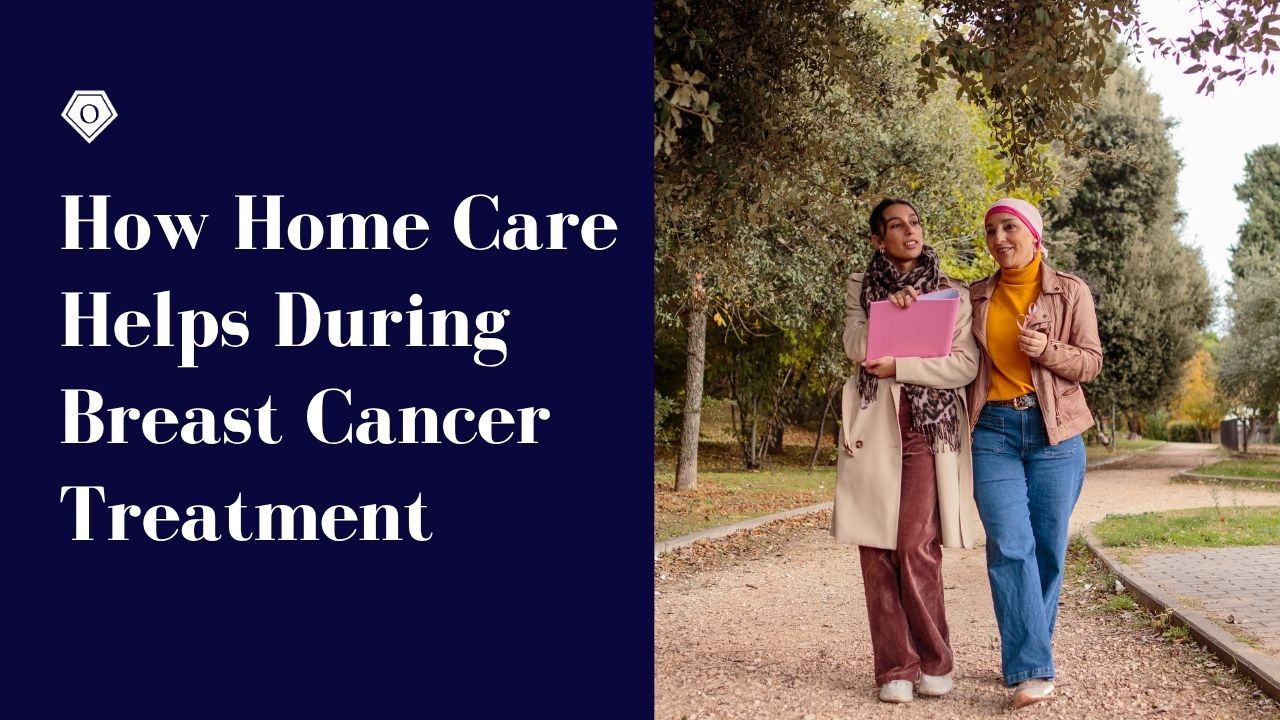
October is Breast Cancer Awareness Month, a time to celebrate survivors, honor those we’ve lost, and remind the women we love to schedule their screenings. It’s also a good moment to talk about something that gets less attention: what life looks like at home during treatment.
Most breast cancer care doesn’t happen in a hospital bed. Chemotherapy, radiation, and recovery from surgery mostly happen in between appointments, at home, where everyday tasks can suddenly feel overwhelming. That’s where in-home care can make a real difference, for the person in treatment and for the family supporting her.
What Treatment Takes Out of Daily Life
Every woman’s journey is different, but many share the same challenges once treatment begins:
- Fatigue that makes cooking, cleaning, and even showering feel exhausting
- Nausea and appetite changes that make regular meals hard to manage
- Physical limits after surgery, like not being able to lift, reach overhead, or drive for a while
- A packed calendar of oncology visits, infusions, scans, and follow-ups
- The emotional weight of a diagnosis, which can make the days feel long and lonely
Add in running a household, caring for kids or grandkids, or living alone, and it’s easy to see why so many women say the hardest part isn’t the treatment itself. It’s everything around it.
How Home Care Helps During Treatment
In-home care fills the gaps so she can put her energy where it matters most: resting, healing, and spending time with the people she loves. A caregiver can help with:
- Rides to and from appointments. No more worrying about driving after chemo or finding someone to take time off work.
- Meal preparation. Simple, nourishing meals made to her tastes, even on days when her appetite is low.
- Light housekeeping and laundry. Fresh sheets, clean dishes, and a tidy space without lifting a finger.
- Personal care. Gentle help with bathing, dressing, and grooming, especially after surgery when arm movement is limited.
- Medication reminders. Keeping track of pills and schedules when “chemo brain” makes it hard to remember.
- Errands and grocery runs. Picking up prescriptions and essentials so she can stay home and rest.
- Companionship. Someone to talk with, watch a favorite show with, or simply sit with on the tough days.
Care can be as little as a few hours a week or as much as round-the-clock support, and it can change as treatment does.
Support for the Whole Family
When someone we love is diagnosed, spouses, adult children, and friends often step up without hesitation. But caregiving on top of work and family can lead to burnout fast.
Home care gives family members room to breathe. A caregiver can cover the hours you can’t, whether that’s the morning after an infusion or the overnight shift after surgery. That way, the time you spend together can be about connection, not just chores.
Signs It May Be Time for Extra Help
It can be hard to ask for help, especially for women who are used to taking care of everyone else. Consider reaching out if:
- Meals are being skipped or replaced with snacks
- Household tasks are piling up
- Getting to appointments has become stressful or unreliable
- She’s recovering from surgery and has limited mobility
- Family caregivers are feeling stretched thin
- She lives alone and spends much of the day by herself
Accepting help isn’t giving up independence. It’s protecting her energy for healing.
We’re Here When You Need Us
At Onyx Home Care, we believe no one should face breast cancer treatment alone. Our compassionate caregivers serve families throughout Daytona Beach and Volusia County with flexible, personalized support built around each client’s schedule and needs.
If you or someone you love is going through treatment, give us a call to talk about how we can help. And this October, take a moment to remind the women in your life to schedule their mammograms. Early detection saves lives.
Are you feeling overwhelmed while caring for a loved one with Alzheimer’s or another type of dementia?
Take this quiz to find out if you need caregiver relief.