
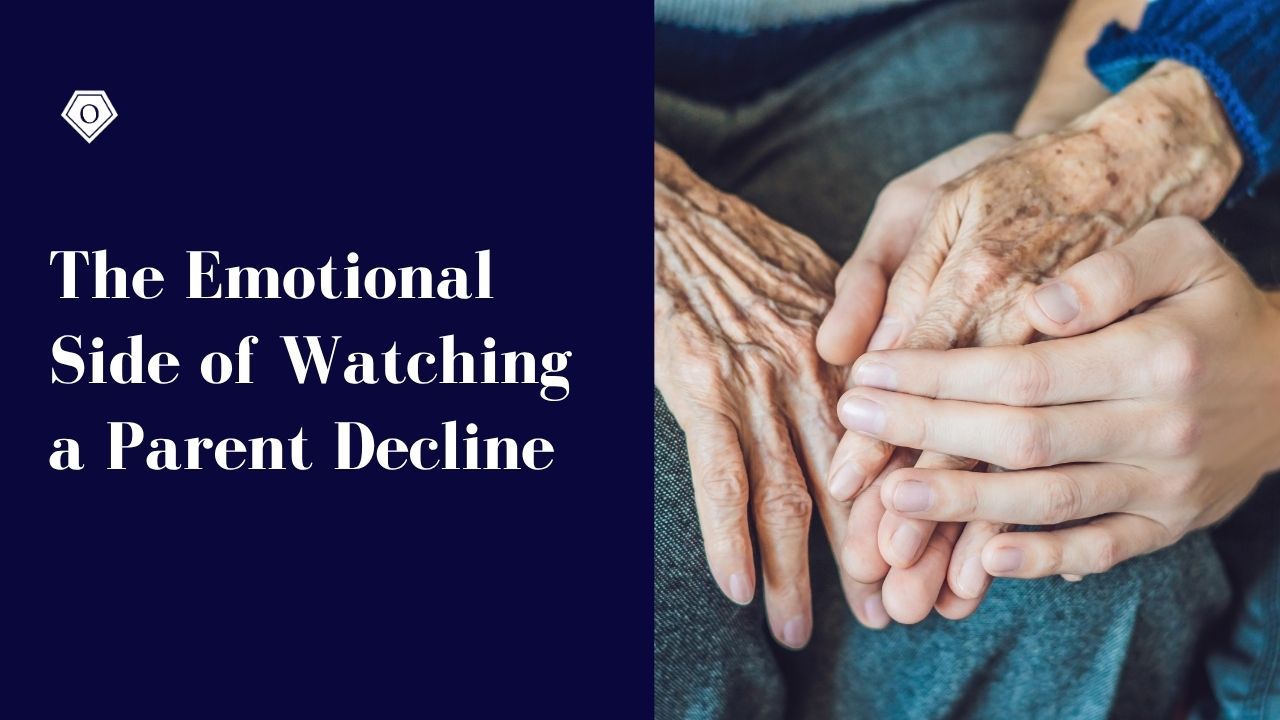
There is a particular kind of grief that does not get talked about enough. It is the grief that comes not from losing someone, but from watching them change. From noticing the small things first — a forgotten word, a missed step, a moment of confusion that passes quickly but stays with you. From realizing, slowly and then all at once, that the parent you have always known is becoming someone who needs you in ways you never expected.
If you are in this season of life, you already know how hard it is to put into words. And you may be carrying more than people around you realize.
The Grief No One Warns You About
Most of us understand grief as something that follows a loss. But caregivers often experience what is sometimes called anticipatory grief, or ambiguous loss, a mourning that happens while the person is still here. You are grieving the parent who used to drive themselves everywhere, who had opinions about everything, who was the one you called when something went wrong. That person is still present in many ways, and yet something has shifted, and you feel the weight of that shift even when you cannot name it.
This kind of grief can be confusing because it does not follow a clear timeline. There is no funeral, no casserole on the doorstep, no socially recognized moment where people know to check in on you. You are expected to keep showing up, keep managing, keep being strong, often while processing something that is quietly breaking your heart.
It is important to know that what you are feeling is real, it is valid, and it makes complete sense.
The Roles Are Reversing, and That Is Hard
One of the most disorienting parts of watching a parent decline is the reversal of roles. The person who raised you, who took care of you, who was the authority and the anchor of your family, now needs you to step into that role for them. That shift is profound, and it does not happen without emotional cost.
You may find yourself making decisions your parent would have once made for themselves. You may be managing their finances, attending their medical appointments, helping them with tasks they have done independently their entire lives. Even when you are doing all of this out of love, it can feel like a loss of the relationship as you knew it.
Some adult children also carry an unexpected feeling of loneliness in this process. Even if your parent is still physically present, the conversations you used to have may no longer be possible. The advice they used to give, the memories you used to reminisce about together, the ease of your relationship before illness or age changed things — all of that can feel out of reach in ways that are quietly devastating.
When Love and Exhaustion Exist at the Same Time
Caregiving is an act of love. But love does not make it easy, and it does not make it painless. It is entirely possible to love your parent deeply and also feel exhausted, frustrated, sad, and sometimes resentful of the situation. Those feelings do not cancel each other out, and experiencing them does not make you a bad son or daughter.
What many caregivers describe is a kind of emotional whiplash. A tender moment in the morning, a difficult episode in the afternoon, guilt about the afternoon by evening. The emotional range of a single caregiving day can be enormous, and doing that day after day without adequate support takes a real toll.
Many caregivers also quietly grieve the life they expected to be living right now. The retirement plans, the travel, the time with grandchildren, the personal goals that have been set aside. Acknowledging that grief is not selfish. It is honest, and honesty is where healing begins.
You Are Allowed to Struggle With This
There is a quiet pressure on family caregivers to appear strong, grateful, and capable at all times. To say “we are managing fine” when someone asks, even when you are not. To push through without complaint because you love your parent and you know this is what family does.
But struggling with this does not mean you are failing. It means you are human. It means you are doing one of the hardest things a person can do, and you are feeling the full weight of it.
Giving yourself permission to not be okay sometimes is one of the most important things you can do. Saying out loud, even just to yourself, “this is really hard,” matters. Finding one person, whether a friend, a counselor, a support group, or a trusted voice in your life, who can hold space for what you are going through matters too.
What Support Can Look Like
One thing caregivers often tell us at Onyx Home Care is that bringing in professional support felt like giving up, until they actually did it. And then they realized it was the opposite.
Having someone you trust step in to care for your parent does not diminish your love or your commitment. It gives you the chance to be a son or daughter again, not just a caregiver. To sit with your parent and just be present, without the weight of every task and decision resting on your shoulders in that moment.
It also gives you back something that is easy to lose in the caregiving years: yourself. Time to rest, to process, to grieve what needs to be grieved, and to show up again with more patience and more presence than you could when you were running on empty.
We offer skilled home care, dementia and Alzheimer’s care, companion care, and personal care for families throughout the Daytona Beach area. But more than the services themselves, we offer families a team that genuinely understands what this season is like, and that approaches every home they enter with care, dignity, and compassion.
You Do Not Have to Walk Alone
If you are watching a parent decline and feeling the emotional weight of that in ways that are hard to carry, we want you to know that you are seen. What you are doing is hard. What you are feeling is understandable. And there is support available to you when you are ready for it.
We would be honored to walk alongside your family. Reach out to the Onyx Home Care team whenever you are ready to talk.
Are you feeling overwhelmed while caring for a loved one with Alzheimer’s or another type of dementia?
Take this quiz to find out if you need caregiver relief.