
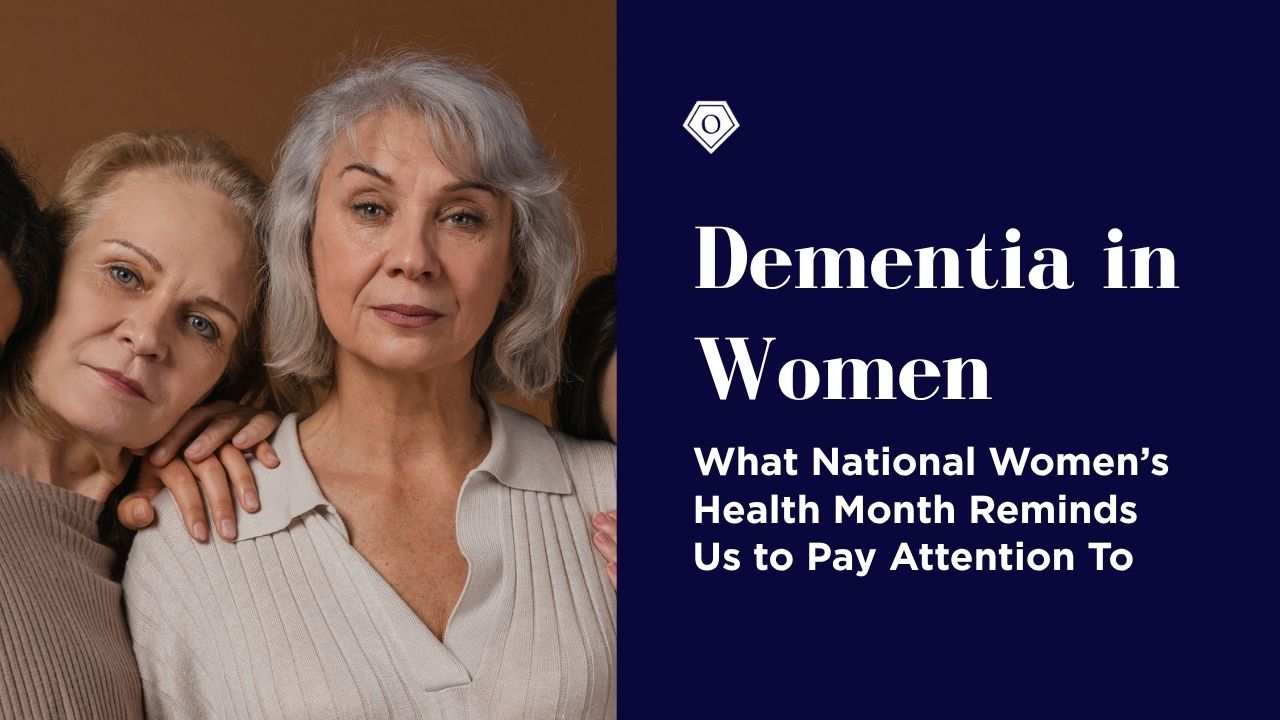
May is National Women’s Health Month, and while conversations often focus on heart health, reproductive care, and mental wellness, there’s one topic that deserves far more attention: dementia in women.
Women are not only more likely to develop dementia, but they’re also more likely to be the ones caring for someone living with it. That dual role makes awareness, early recognition, and proactive care especially important.
Why Dementia Impacts Women More
Women account for nearly two-thirds of people living with dementia, including Alzheimer’s disease. There are a few key reasons behind this:
- Longer life expectancy
Dementia risk increases with age, and women tend to live longer than men. - Hormonal changes
The drop in estrogen after menopause may play a role in brain health and cognitive decline. - Biological differences
Research continues to explore how female brain structure and genetics influence dementia risk. - Caregiver stress
Women are more likely to be caregivers, which can increase chronic stress—a factor linked to cognitive decline.
Early Signs Often Overlooked in Women
Dementia doesn’t always start with obvious memory loss. In women especially, early symptoms can be subtle and easy to dismiss:
- Struggling to find the right words in conversation
- Feeling overwhelmed by decision-making
- Difficulty managing schedules or routines
- Changes in mood, including increased anxiety or irritability
- Withdrawing socially or losing interest in usual activities
Because many of these symptoms can overlap with menopause, stress, or burnout, they’re often brushed off—delaying diagnosis and support.
The Caregiving Reality
Women aren’t just more likely to develop dementia; they’re also more likely to care for someone who does.
If you’re supporting a parent, spouse, or loved one, you may recognize this:
- Tracking medications and appointments
- Watching for subtle behavioral changes
- Feeling unsure whether something is “normal aging” or something more
- Carrying the emotional weight of making care decisions
Over time, this can lead to caregiver burnout, especially when you’re trying to balance family, work, and your own health.
What Women Can Do Now
National Women’s Health Month is a reminder to take a proactive approach… not out of fear, but out of wisdom.
1. Pay attention to changes
If something feels off—whether in yourself or a loved one, don’t ignore it. Early conversations matter.
2. Prioritize brain health
Small, consistent habits make a difference:
- Regular movement
- Quality sleep
- Social connection
- Mental stimulation
- Managing blood pressure and overall health
3. Advocate for answers
If concerns arise, push for proper evaluation. Early diagnosis opens the door to better care planning and support.
4. Support the caregiver, too
If you’re in a caregiving role, your health matters just as much. Burnout helps no one.
When It’s Time to Ask for Help
One of the hardest parts of dementia, for both women experiencing it and those caring for them, is knowing when to bring in support.
It might be time to explore additional care if:
- Safety is becoming a concern
- Medications are being missed or confused
- Daily routines are breaking down
- You feel overwhelmed or unsure what to do next
Support doesn’t mean giving up control; it means building a system that protects everyone involved.
Dementia in Women
Dementia in women is not just a medical issue, it’s a family issue, a caregiving issue, and a quality-of-life issue.
This National Women’s Health Month, the goal isn’t to create fear. It’s to create awareness.
Because when you understand what to look for, when you trust what you’re noticing, and when you’re willing to ask for help… you change the outcome.
Are you feeling overwhelmed while caring for a loved one with Alzheimer’s or another type of dementia?
Take this quiz to find out if you need caregiver relief.