
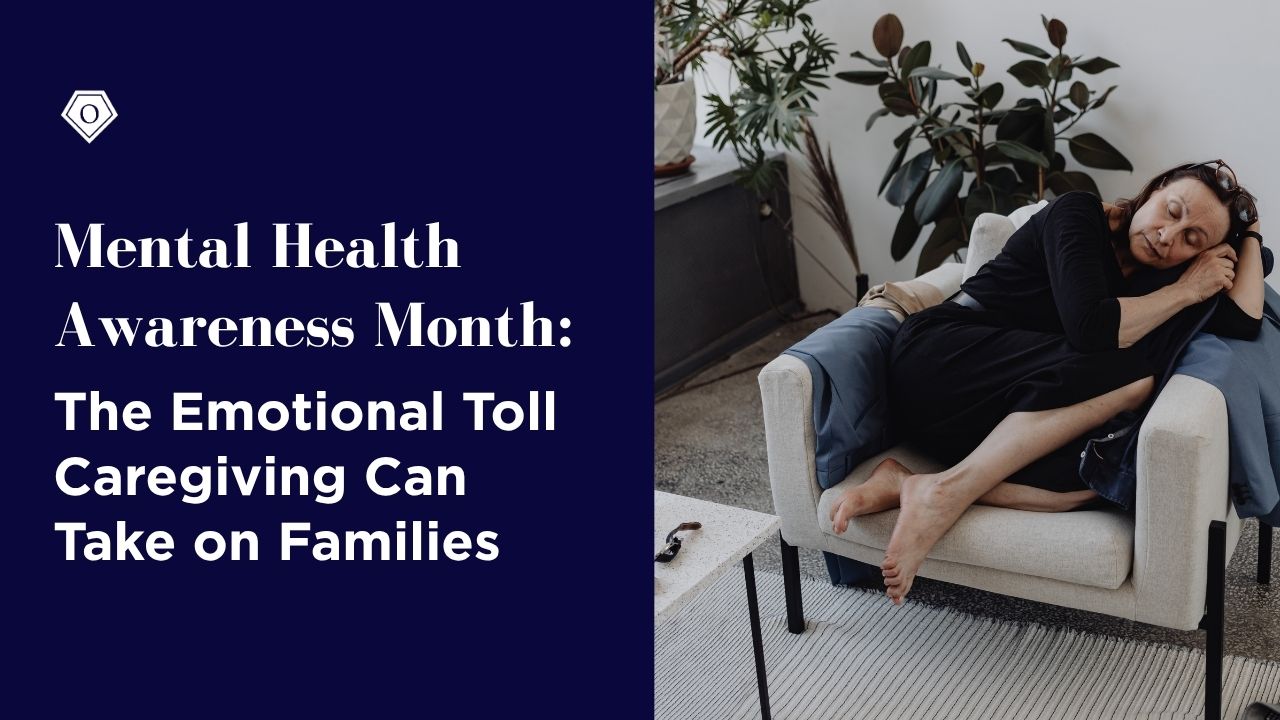
May is Mental Health Awareness Month, a reminder that emotional well-being matters just as much as physical health.
For family caregivers, that reminder is especially important.
When a loved one begins needing additional support due to aging, dementia, mobility issues, or chronic health concerns, family members often step into caregiving roles without fully realizing how emotionally demanding that responsibility can become.
Adult children balance careers, parenting, and caregiving.
Spouses take on increasing physical and emotional responsibilities.
Long-distance family members try to coordinate care from afar.
And in the middle of caring for everyone else, caregivers often neglect their own mental and emotional health.
Caregiver Stress Often Builds Gradually
Most caregivers do not suddenly feel overwhelmed overnight.
The emotional strain usually builds slowly through daily responsibilities, constant worry, interrupted routines, and ongoing uncertainty.
At first, caregiving may look manageable:
- Driving to appointments
- Helping with medications
- Preparing meals
- Checking in more often
- Assisting with errands
But over time, responsibilities often increase.
Families may begin managing:
- Memory changes
- Safety concerns
- Sleep disruptions
- Emotional outbursts
- Mobility challenges
- Wandering risks
- Medical coordination
- Daily supervision
Many caregivers operate in a constant state of stress without fully recognizing how much pressure they are carrying.
The Emotional Impact of Caregiving Is Real
Caregiving can be deeply meaningful, but it can also feel emotionally exhausting.
Caregivers often experience:
- Anxiety
- Chronic stress
- Guilt
- Isolation
- Sleep deprivation
- Emotional fatigue
- Depression
- Difficulty concentrating
- Feeling overwhelmed or emotionally numb
Many caregivers feel pressure to “stay strong” for everyone else, especially when caring for a parent, spouse, or loved one with cognitive decline.
But ignoring emotional health does not make the stress disappear.
Mental and emotional burnout can affect physical health, relationships, work performance, and overall quality of life.
Guilt Prevents Many Caregivers from Asking for Help
One of the most common emotions caregivers experience is guilt.
Families may feel guilty for:
- Feeling frustrated
- Needing a break
- Wanting help
- Feeling emotionally exhausted
- Balancing caregiving with work or parenting
- Not being able to “do it all”
But caregiving was never meant to be handled alone.
Asking for support is not giving up on a loved one. In many cases, it is what allows caregivers to continue showing up in healthier, more sustainable ways.
Support Can Improve Quality of Life for Everyone
One of the biggest misconceptions about home care is that it only benefits the senior receiving care.
In reality, home care often provides enormous emotional relief for caregivers too.
RN-supervised home care can help families by providing:
- Consistent routines
- Medication reminders
- Companionship
- Mobility assistance
- Meal preparation
- Wellness monitoring
- Dementia support
- Respite for family caregivers
Even a few hours of support each week can help caregivers rest, focus on their own health, and spend more meaningful time with their loved one instead of constantly managing tasks and stress.
Caregivers Deserve Support Too
Mental Health Awareness Month is an important reminder that caregivers are human too.
Supporting an aging loved one can be emotional, exhausting, and overwhelming at times, especially when families are trying to balance caregiving with every other part of life.
Caregivers deserve support, rest, and compassion just as much as the people they care for.
At Onyx Home Care, our RN-supervised home care services are designed to support both seniors and the families caring for them with compassionate, personalized care that helps reduce stress and improve quality of life for everyone involved.
Are you feeling overwhelmed while caring for a loved one with Alzheimer’s or another type of dementia?
Take this quiz to find out if you need caregiver relief.