
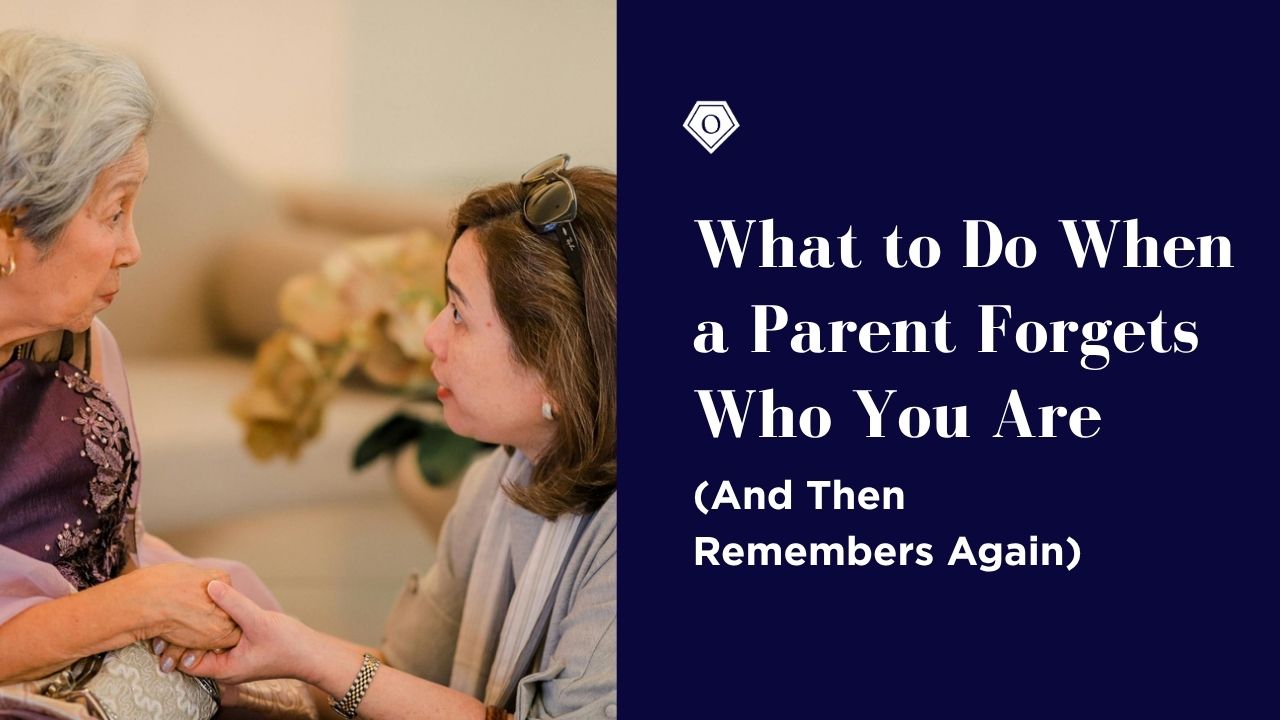
There are moments in caregiving that feel different.
Not because they are loud or dramatic, but because of how quiet they are.
You walk into the room. You say hello. Instead of recognition, there is hesitation, confusion, or even fear.
“Who are you?”
And just like that, everything shifts.
Then, sometimes just minutes later, it is gone.
“Oh, there you are.”
They remember again.
If you have experienced this, you know how disorienting it can be, not just for them, but for you.
Why This Happens in Dementia
Memory loss in dementia is not linear.
It does not follow a straight path of forgetting and staying forgotten. Instead, it comes and goes.
A parent may recognize you in the morning but not in the evening. They may forget your name, but still understand your role. They may feel that you are familiar without knowing why.
This happens because dementia affects how the brain processes and retrieves information, not just whether the memory exists.
The memory of who you are may still be there, but access to it becomes inconsistent.
Why It Feels So Personal (Even Though It Is Not)
When a parent forgets who you are, it can feel like rejection.
Like something meaningful has been lost between you.
But this is not about love. It is not about your relationship. It is not something you caused.
It is a neurological change, not a choice.
Even when they cannot name you, there is often still an emotional recognition underneath it. They may not know who you are, but they may still feel safe with you.
How to Respond in the Moment
Your instinct may be to correct them or try to jog their memory, but that can sometimes increase confusion or distress.
Instead, focus on calm, simple connection.
Gently reintroduce yourself in a natural way. A simple “Hi, it’s me, Sarah. I’m here with you” can go much further than pressing them to remember.
Pay attention to how they are feeling more than what they are saying. If they seem anxious or unsure, respond to the emotion first. Reassurance often matters more than accuracy.
Try not to argue or force recognition. Meeting them where they are in that moment helps keep things calm and safe.
Familiar cues can sometimes help. Your tone of voice, a routine, or even a photo nearby may gently reconnect the moment without pressure.
In many cases, recognition may return on its own. Giving it a little time can make a difference.
What These Moments Mean for Care
These episodes are often a sign that dementia is progressing.
Not always dramatically, but enough that the brain is struggling more with recognition and recall.
Families often start to notice patterns around the same time. There may be increased confusion at certain times of day, more frequent memory lapses, or emotional reactions tied to disorientation.
Even if your parent still seems mostly independent, these moments matter.
They are early indicators that more consistent support may be needed.
You Don’t Have to Walk Alone
These are the moments families do not always talk about.
The quiet ones. The ones that linger. The ones that make you start asking questions you were not ready to ask.
Is it time to step in more?
Am I doing enough?
What happens if this gets worse?
Support does not take independence away. It protects it.
Having the right level of care in place can help reduce confusion, create stability, and ensure your parent is safe, even as these moments become more frequent.
If your parent forgets who you are and then remembers again, you are not imagining it.
You are not alone in experiencing it.
Dementia does not erase everything all at once. It changes access. It changes consistency. It changes how the brain connects the pieces.
But connection itself is often still there, just in a different form.
How you respond in those moments can make all the difference.
Are you feeling overwhelmed while caring for a loved one with Alzheimer’s or another type of dementia?
Take this quiz to find out if you need caregiver relief.